
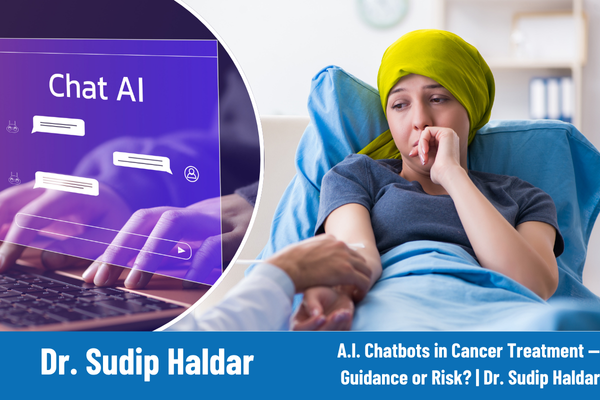
A.I. Chatbot (ChatGPT/Gemini) in Cancer Treatment—Will It Save or Harm?
Is it safe to get cancer-treatment advice from A.I. chatbots like ChatGPT or Gemini?
Using real patient stories and clear explanations, he highlights critical concerns around relying solely on A.I. for medical guidance. He also provides a practical checklist so you and your loved ones can use these tools safely and wisely.
Why the Concern?
- Risk of Misinformation: Chatbots may generate seemingly convincing answers—but they don’t always understand nuance or context. Dr. Haldar shows how subtle wording in advice can mislead patients.
- No Diagnostic Authority: Unlike a qualified oncologist, A.I. lacks clinical judgment, cannot physically examine you, and may miss crucial symptoms.
- Emotional Impact: Receiving ambiguous or alarming responses from a chatbot can heighten anxiety—especially during a cancer journey.
- Data Limitations: Many A.I. systems are trained on past data and might not reflect the latest research, regional practices, or individual variations.
What Dr. Haldar Demonstrates
- Real-life patient scenarios where A.I. advice added confusion rather than clarity.
- Common “red-flag” phrases in chatbot responses that should trigger caution.
- Clear criteria of when it is appropriate to consult A.I.—and when to seek a specialist immediately.
- A checklist for safe A.I. use, including verifying sources, discussing with your doctor, and being wary of off-label claims.
Key Takeaways
- A.I. chatbots can provide general information but are not substitutes for qualified cancer specialists.
- Always discuss any advice you receive from A.I. with your oncologist before acting.
- Stay informed, ask questions, and keep your doctor in the loop—especially if you are undergoing cancer treatment.
- Knowledge plus human expertise = safer outcomes.
Final Thought
In the journey of cancer care, trust, clarity, and collaborative expertise matter deeply. While A.I. chatbots represent fascinating technology, Dr. Haldar reminds us that they must complement—not replace—the human touch of experienced clinicians.